



Jump To
If you’ve been searching for a way to effectively fade or remove age spots and sun spots, our expert dermatologists are here to help. Patients from all over Boston, Cambridge, Brookline and surrounding areas visit The Dermatology Institute of Boston to treat these dark patches, restoring clear skin.
To find out more about age spots and sun spots, arrange a consultation. We’re near the Boston Public Library, and patients driving to us usually get off at the Copley Square exit on Interstate 90 (the pike).

Age spots and sun spots are types of hyperpigmentation (or brown discoloration). Hyperpigmentation occurs when an area of the skin produces excess melanin pigment cells. The resulting cluster of cells forms a spot that is darker than the surrounding skin.
Age spots and sun spots are flat patches on the surface of the skin and may range in color from light tan to dark brown and come in various shapes and sizes. They are also often called solar lentigines or liver spots (although they actually have nothing to do with the liver!).
Sun spots and age spots are not painful and are not dangerous. However, over time, they can grow larger and become darker. Many people feel self-conscious about them, since they can be an indicator of aging skin. Because of this, they come to our dermatologists for effective sun spot and age spot removal.
Age spots and sun spots typically appear on areas of the body that have had the most exposure to the sun such as: the face, shoulders, arms, upper back, and hands. They can also form on the legs and the décolletage or chest area. These body regions typically receive more sun exposure than other areas.
Patients over age 50 are more likely to get age spots and sun spots, though younger patients can still develop them. People with fairer skin are also more likely to develop these patches. Those with chronic sun exposure or a history of sunburns are also more prone to sun spots.
Additionally, people with a family history of age spots may be at a higher risk of developing them.
The main risk factor for age spots and sun spots is prolonged or repeated exposure to UV (ultraviolet) rays. Both ultraviolet a and ultraviolet B (UVA and UVB) rays cause skin damage, and increased melanin production is the skin’s attempt to protect itself and reduce further damage.
People who regularly experience a high degree of prolonged sun exposure are at a high risk of developing sun spots and age spots. This is especially the case if they don’t apply SPF 30+ sunscreen regularly or wear other forms of sun protection. People who frequently use tanning beds are also at an increased risk of hyperpigmentation.
Other risk factors include hormone fluctuations and medications that cause increased sensitivity to sunlight.

If you’ve been struggling with age spots and sun spots, it’s best to visit The Dermatology Institute of Boston, one of Boston’s top dermatology clinics. Our board-certified dermatologists have years of experience performing safe and effective treatments for patients from areas in downtown Boston and surrounding areas such as like Brookline, Somerville, Watertown, and Newton Corner.
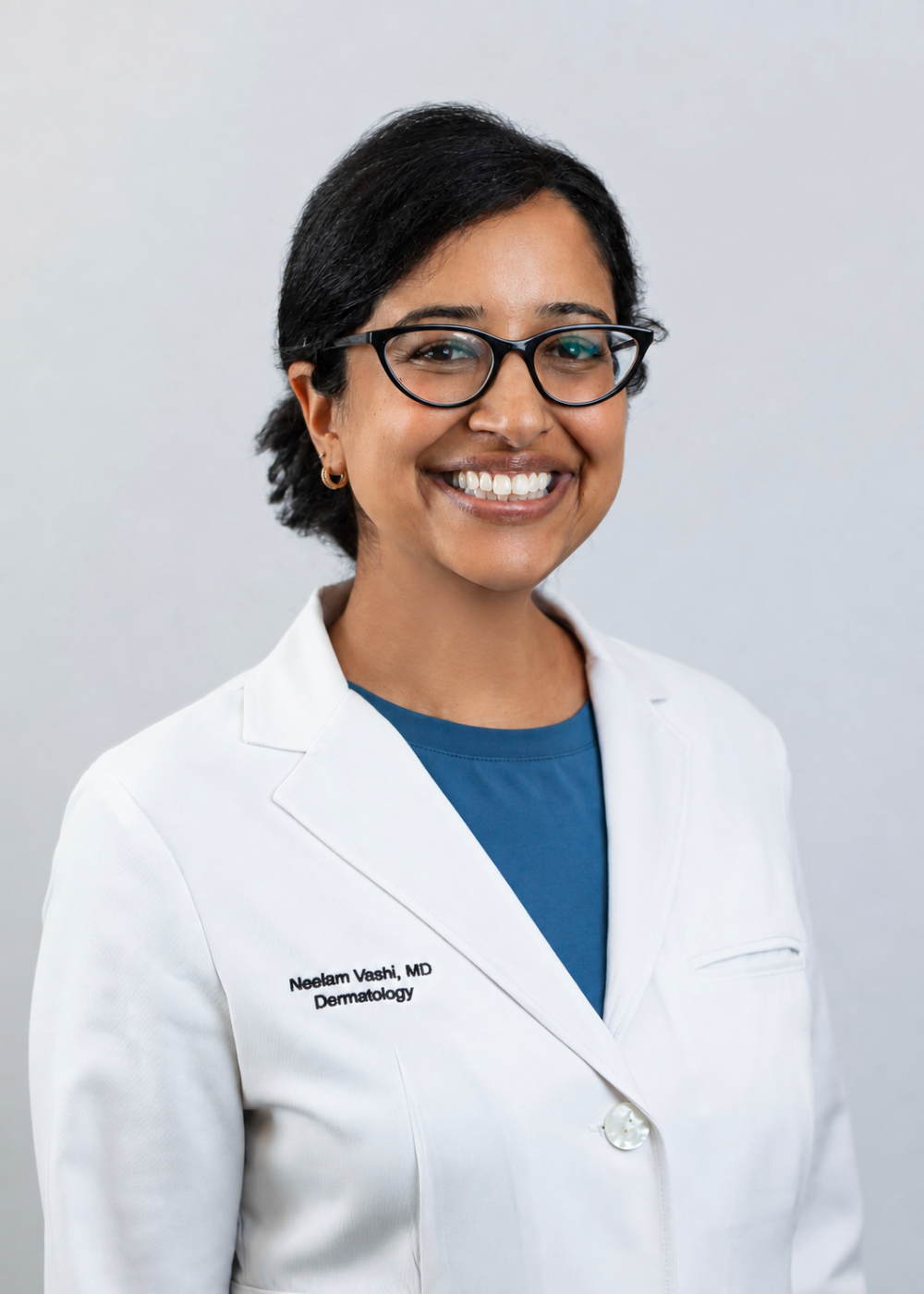
While many of our dermatologists treat sun spots, it can sometimes be trickier to treat sun spots or hyperpigmentation when patients have a darker skin tone. When it comes to sun spots and age spots in ethnic skin tones or in darker skin tones, Dr. Neelam A. Vashi is a seasoned expert. Dr. Vashi specializes in hyperpigmentation and cosmetic dermatology. She also has a deep knowledge of laser treatments and safe treatment options for skin of color.
Dr. Vashi has been featured on networks like CNN, CNBC, and ABC. She has also been featured in Forbes, Cosmopolitan, Newsweek, The Boston Globe, and The Washington Post.
Before joining the staff at The Dermatology Institute of Boston, Dr. Vashi was the director of the Boston University Cosmetic and Laser Center and the founding director of the Boston University Center for Ethnic Skin.
She also served as an Associate Professor of Dermatology at the Boston University Chobanian & Avedisian School of Medicine and as an Adjunct Professor of Dermatology at Virginia Commonwealth University.
Dr. Vashi regularly delivers presentations and lectures as a guest speaker at medical conferences. She has written four textbooks and numerous textbook chapters, along with hundreds of medical journal articles.
She went to medical school at Evanston’s Northwestern University, graduating with her MD. She then chose to attend NYU for her dermatology residency in the Ronald O. Perelman Department of Dermatology.

Patients from the South End, Southie, Beach Hill, Back Bay and surrounding areas come to The Dermatology Institute of Boston to undergo age spot and sun spot treatments. We offer a variety of effective treatments:
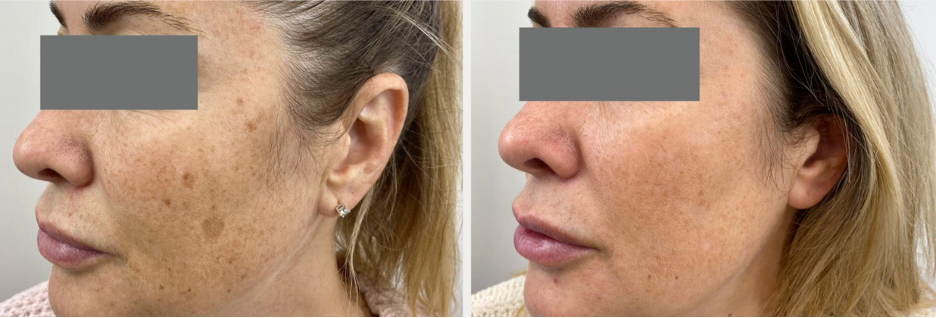
PicoWay Laser – The FDA-approved PicoWay laser treatment emits energy pulses into the targeted sun spot or age spot for only trillionths of a second. This breaks up the pigmented cells. It can be used safely on patients of all skin tones and skin types. Usually, anywhere from two to five treatment sessions are required.
Chemical Peels – Superficial chemical peel treatments involve application of a chemical mixture to the skin’s surface. The mixture penetrates into the top layer, causing it to gradually peel away. This removes the pigmented superficial skin, revealing new skin that doesn’t have excess pigmented cells.
IPL Treatments – Like PicoWay treatments, IPL (intense pulsed light) treatments apply energy to break up clusters of pigment cells. Instead of laser energy, they use light energy. Usually, two sessions are needed to fade sun spots and age spots. This treatment option is usually safest in patients with fairer skin tones.
Liquid Nitrogen – A liquid nitrogen spray is applied to the targeted age spot or sun spot. This freezes the pigmented skin cells, resulting in the shedding of those cells.
Lightening Cream – This topical treatment can be either prescription or OTC. Their ingredients exfoliate the skin, increase the skin cell turnover rate, and decrease melanin pigment production, causing spots to fade.
Meet with one of our dermatologists to learn more about age spots and sun spots. To book your consultation, contact The Dermatology Institute of Boston. Out-of-state patients stay at hotels like the Sheraton Boston Hotel, the Boston Marriott, Raffles Hotel, and the Fairmont Copley Hotel.














Dear Patients,
Our goal here at The Dermatology of Institute of Boston is protect the health of our patients and staff. To continue caring for our patients during these uncertain times, while strictly adhering to the guidelines set by the CDC, we will be only offering virtual consultations. For some patients, an in person visit is best, but if you feel that your concern could be addressed online, this may be a convenient option for you.