Jump To
TCA Cross Technique Chemical Peel for Acne Scars is a precise treatment option for certain depressed acne scars, especially narrow ice pick scars and select boxcar scars. At The Dermatology Institute of Boston, we evaluate acne scarring carefully before recommending treatment because each scar pattern responds differently. Some patients have a few deep pits from past cystic acne, while others have a combination of shallow texture changes, discoloration, and deeper indentations. Our goal is to understand what is causing the uneven skin surface and create a treatment plan that feels thoughtful, realistic, and medically appropriate.
TCA CROSS stands for Chemical Reconstruction of Skin Scars using trichloroacetic acid. Unlike a traditional full-face peel, this technique uses a tiny amount of acid placed directly into individual scars. That focused approach allows us to treat the base of the scar while limiting exposure to the surrounding skin. Patients who are exploring chemical peels in Boston often appreciate that TCA CROSS is not designed to peel the entire face. It is a targeted method for specific acne scar shapes.
Because acne scarring can be complex, we do not view TCA CROSS as a one-size treatment. We may recommend it alone, or we may discuss it alongside lasers, microneedling, acne control, or other resurfacing options, depending on your skin tone, scar type, downtime preferences, and treatment goals. We also review your current skincare routine, sun exposure, history of pigmentation, and whether active breakouts need to be stabilized first.
Many patients come to us after trying topical products, facials, or surface exfoliation and realizing that deeper acne scars need more than routine skincare. TCA CROSS is different because it is placed inside selected scar depressions rather than swept broadly across the skin. The controlled application creates a localized healing response. Over time, that healing response can support collagen remodeling in the treated scar, helping the depression look shallower and less shadowed.
This treatment is most often considered for atrophic acne scars, which are indented scars that form when inflammation damages collagen in the skin. Ice pick scars can look like tiny, deep punctures. Boxcar scars may appear as wider depressions with sharper edges. Rolling scars often have a softer, wave-like appearance. TCA CROSS is often best suited to ice pick scars and some boxcar scars, while rolling scars may need a different approach, such as collagen induction treatments including laser resurfacing and dermal fillers.
During your consultation, we look at the scar pattern under good lighting and from different angles. This matters because acne scars are not only about texture. Shadows, redness, brown marks, enlarged pores, and active acne can all affect how the skin looks. For example, a patient with a few deep ice pick scars on the cheeks may be a better candidate for TCA CROSS than someone whose main concern is broad redness or shallow discoloration. In that case, we may discuss acne scar treatment options that address texture more globally.
We also talk openly about expectations. TCA CROSS can improve the appearance of selected scars, but it does not erase scarring completely. Most patients need a series of treatments, and improvement is gradual as the skin heals and collagen remodeling develops. We prefer this honest, physician-led conversation because it helps you understand why one treatment may be recommended over another.
The procedure begins with a careful skin assessment. We confirm the scars being treated, review your health history, and discuss any recent skincare products, medications, or procedures that may affect healing. We may ask some patients to pause certain exfoliating products, retinoids, or irritating active ingredients before treatment. We also emphasize sun protection because recently tanned or sun-exposed skin may have a higher risk of irritation and pigment changes.
On the day of treatment, the skin is cleansed thoroughly. A small applicator is used to place TCA directly into the selected scars. Patients usually feel a brief stinging, warmth, or prickly sensation. A temporary white frosting effect may appear where the acid contacts the skin. This is expected and helps show that the solution has been applied to the targeted area. The appointment is typically focused and controlled, with attention to precision rather than speed. After treatment, the treated spots may darken, crust, or feel slightly tender as healing progresses. The skin should not be picked, scrubbed, or exfoliated aggressively. We give aftercare guidance based on your skin and the extent of treatment, often including gentle cleansing, bland moisturizer, strict sunscreen use, and avoiding irritating products until the skin has recovered. Because TCA is a strong acid, this treatment should be performed only in an appropriate clinical setting by trained professionals.
A series may be recommended. Some patients notice gradual softening after several sessions, while others may benefit from combining TCA CROSS with microneedling treatment, fractional laser treatment, or medical acne care. We may sequence treatments over time so the skin has a chance to heal between procedures. This staged approach is often helpful because acne scars may involve multiple layers and scar types.
Before treatment, we want your skin to be as calm and stable as possible. If you are still getting inflamed breakouts, we may recommend addressing acne first so new scars are less likely to form. For patients with ongoing acne, our team can discuss medical acne treatment before or alongside scar-focused care. This is especially important when breakouts are cystic, frequent, painful, or leave marks.
We also review pigment risk. Any procedure that creates controlled injury in the skin can potentially lead to temporary or persistent discoloration, especially in patients prone to hyperpigmentation. This does not mean patients with deeper skin tones cannot be candidates. It means we plan carefully, use appropriate techniques, and discuss preparation and aftercare in detail. Our dermatology team considers your skin type, scar depth, lifestyle, and tolerance for downtime before recommending next steps.
Recovery is usually localized to the treated spots rather than the entire face. You may see redness, darkening, crusting, or small scabs where the solution was placed. These areas typically need time to shed naturally. Makeup use, exercise, sun exposure, and active skincare products may need to be adjusted temporarily based on our instructions. We explain what is normal and when to contact us with questions, so you are not left guessing during the healing process.
Cost depends on the number of scars treated, the size of the treatment area, whether TCA CROSS is performed alone or combined with another procedure, and how many sessions are recommended. A small number of selected scars may require a different plan than widespread cheek scarring with mixed scar types. During your consultation, we provide personalized guidance so you understand the recommended treatment path, expected downtime, and investment before moving forward.
Patients from Back Bay, Beacon Hill, South End, Fenway, Cambridge, Brookline, Somerville, and surrounding Boston communities visit us for acne scar evaluation because we offer clear information and skilled dermatology care. Our office near Copley Square offers a professional setting where cosmetic concerns are evaluated with the same thoroughness and respect as medical skin conditions.
The Dermatology Institute of Boston is a physician-led dermatology practice focused on careful evaluation, individualized treatment, and patient comfort. Acne scars can be frustrating because these scars often remain long after breakouts have improved. We take the time to identify whether your concern is true indentation, post-inflammatory discoloration, enlarged pores, active acne, or a combination of these issues. That distinction helps us recommend care that is better matched to your skin.
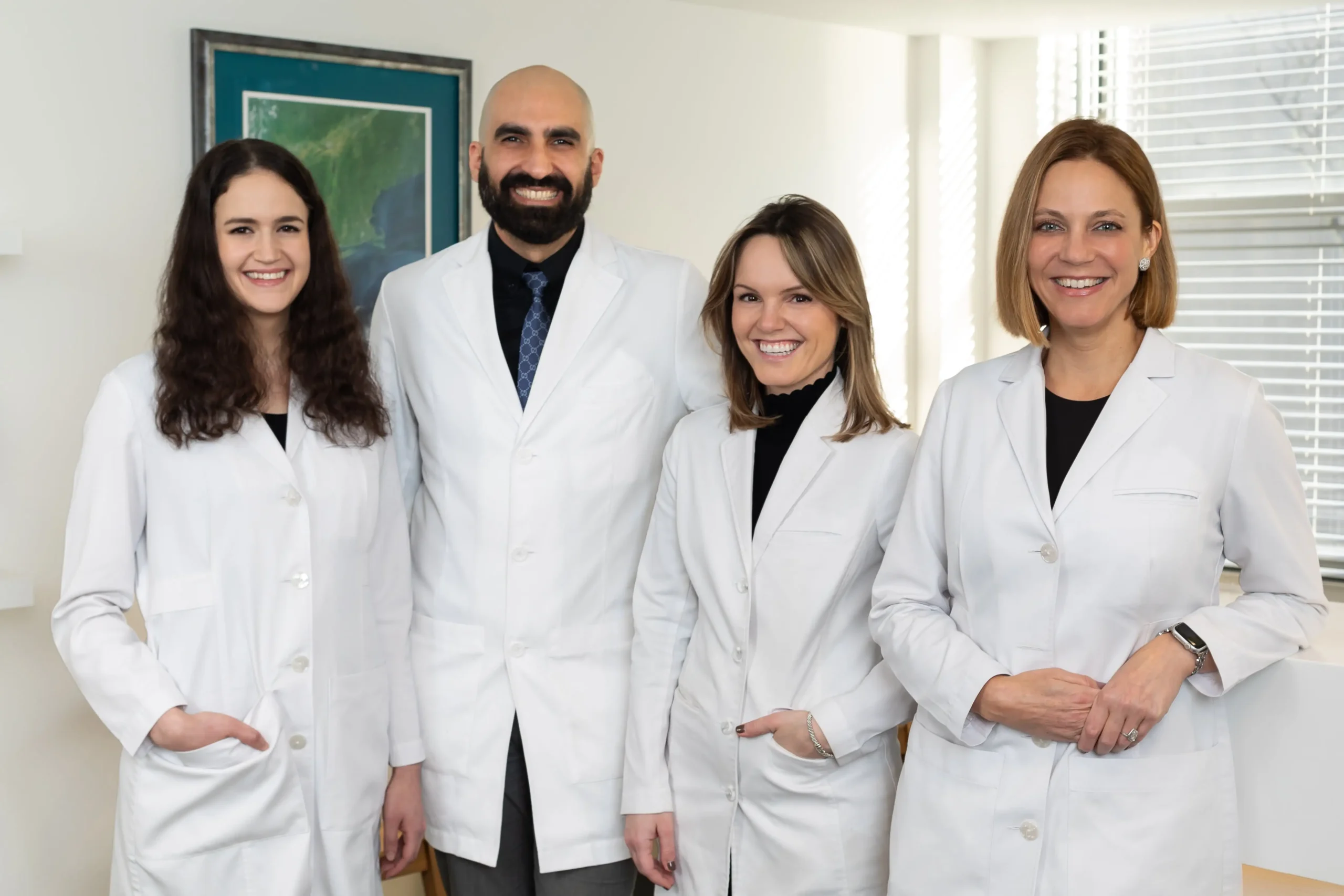
Our board-certified dermatologists and trained dermatology team offer a full range of medical and cosmetic services, which allows us to think beyond a single procedure. If TCA CROSS is appropriate, we explain why. If another treatment is better suited to your scar pattern, we explain that as well. Some patients benefit from a scar-by-scar approach, while others need a broader resurfacing strategy. We want you to feel informed, not pressured.
We also understand that acne scars can affect confidence in everyday life, from work meetings to social events and close-up photos. Our recommendations are grounded in clinical judgment and realistic outcomes. We discuss what improvement may look like, how long results may take to develop, what aftercare involves, and how we can reduce the chance of avoidable irritation or pigment changes.
If you are considering TCA CROSS in Boston, we invite you to book an appointment online with our dermatology team. You can also call us at (857) 317-2057 or contact our Boston dermatology office to take the next step toward a personalized acne scar consultation. At The Dermatology Institute of Boston, we are here to help you understand your options and move forward with care that feels thorough, thoughtful, and tailored to your skin.

















Dear Patients,
Our goal here at The Dermatology of Institute of Boston is protect the health of our patients and staff. To continue caring for our patients during these uncertain times, while strictly adhering to the guidelines set by the CDC, we will be only offering virtual consultations. For some patients, an in person visit is best, but if you feel that your concern could be addressed online, this may be a convenient option for you.