
Board-Certified Dermatologists Share Their Tick Bite Dos & Don’ts Checklist

Summer is the perfect time to enjoy hiking, gardening, and spending time outdoors, but it’s also peak tick season. Knowing how to prevent tick bites and what to do if you find one can help reduce your risk of tick-borne illnesses like Lyme disease.
Tick Bite Dos & Don’ts Checklist:
- Do – remove the tick with fine-tipped tweezers. Grasp the tick as close to the skin as possible and pull upward with slow, steady pressure. Avoid twisting or jerking, which can leave parts of the tick embedded in the skin.
- Do – clean the bite area. After removing the tick, wash the area thoroughly with soap and water or rubbing alcohol.
- Do – dispose of the tick safely. Place it in rubbing alcohol, seal it in a container before throwing it away or flushing it down the toilet. Consider taking a photo of the tick first in case your healthcare provider needs help identifying it.
- Don’t – use heat or home remedies to remove a tick. Avoid using matches, petroleum jelly, nail polish, or other home remedies. These methods can cause the tick to release more saliva into the bite, potentially increasing the risk of disease transmission.

Tick Bite Prevention
While ticks are most active during warmer months, some species remain active into the fall and even winter.
Whenever you’re spending time outdoors:
- Wear light-colored clothing so ticks are easier to spot
- Use an EPA-approved insect repellent containing DEET.
- Stay on marked trails and avoid tall grass whenever possible.
- Wear long sleeves and long pants in wooded or grassy areas.
- Check yourself, children, and pets for ticks after coming indoors, paying close attention to behind the knees, ankles, groin, scalp, and underarms.
Know When to Call Your Healthcare Provider
Most tick bites can be managed at home. However, contact your healthcare provider if:
- The tick was attached for more than 24 hours or appeared engorged.
- You develop a fever, chills, headache, fatigue, joint pain, swelling, or a new rash.
- You notice the classic “bull’s-eye” rash associated with Lyme disease.
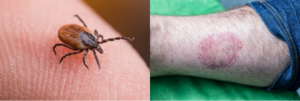
Early evaluation and treatment can make a significant difference. A few simple precautions can help you and your family spend more time outside with greater peace of mind. Check for ticks after every outdoor adventure, remove them promptly if found, and monitor for symptoms in the weeks that follow.